
Hardscape · 9 min read
Paver Patio Care & Maintenance Guide
Published April 22, 2024 · Updated May 21, 2026
How to keep your paver patio looking new for 30+ years in the PNW climate. First-30-days care, monthly tasks, freeze-thaw prep, and what to never do.
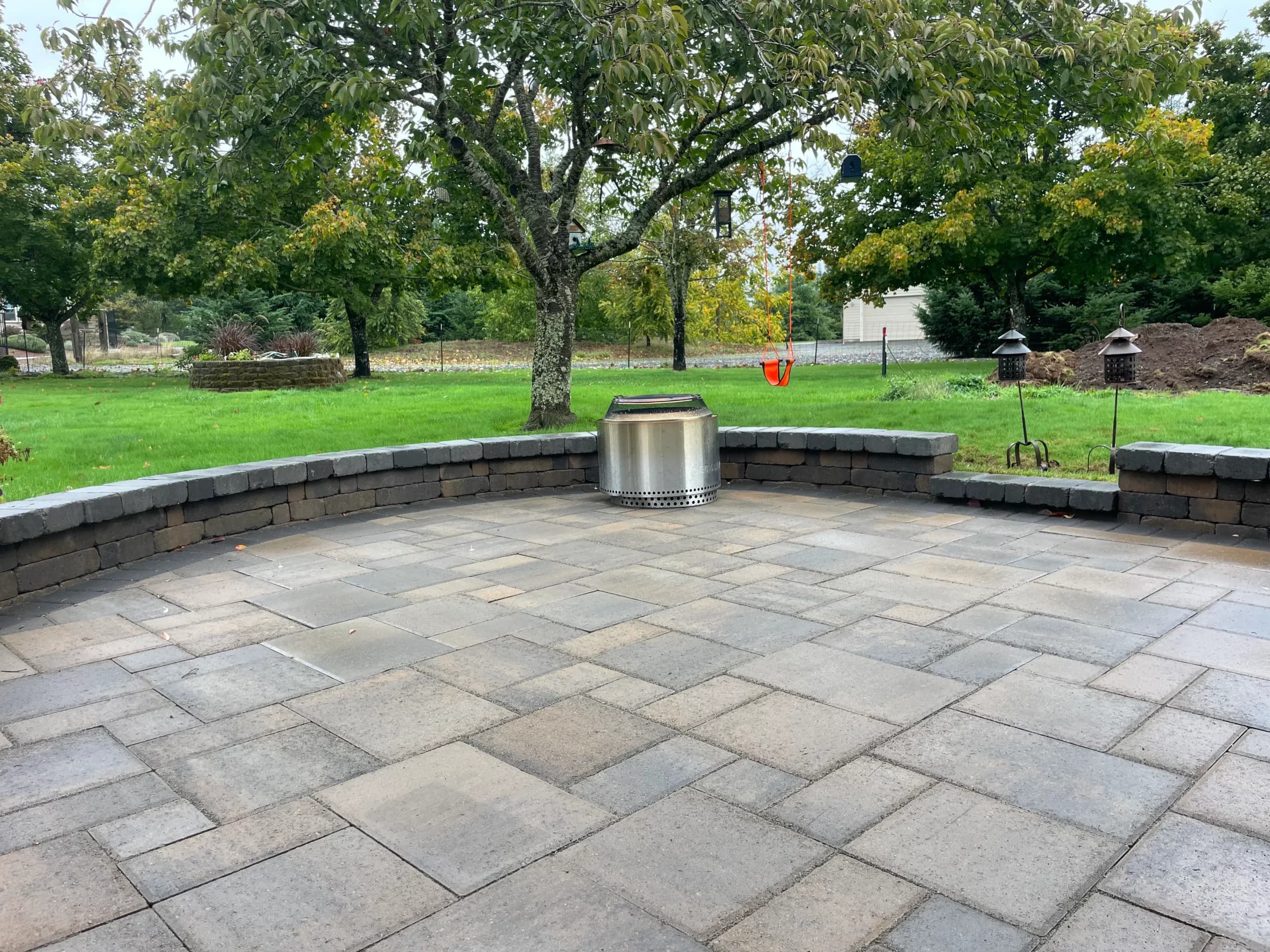
A properly installed paver patio in the Portland metro will last 30+ years with basic care. Most maintenance is preventive — small habits that keep small problems from becoming big ones. This guide covers everything you need to know about caring for a GI Landscape paver install.
The first 30 days after install
- Let the polymeric sand cure 24-48 hoursbefore walking on the patio. Sand needs to dry and harden between the joints. We'll tape it off during install — respect the tape.
- Avoid heavy point loads for the first 7 days.Light foot traffic is fine immediately. No vehicles, no pallets of materials, no kids' bikes parked in one spot for hours.
- Don't wash for 14 days. The polymeric sand needs a full cure cycle. Aggressive water before then washes it out of the joints.
Monthly during use season (April through October)
- Sweep off organic debris.Leaves, mulch, grass clippings — anything that sits on the surface for weeks stains the pavers. A 5-minute sweep weekly prevents permanent marks.
- Quick rinse with a garden hose after big events, spilled food, or pet accidents. The faster you rinse, the lower the chance of staining.
Seasonal tasks
Spring (March-April)
- Inspect the polymeric sand joints.After winter freeze-thaw, some joints may have minor sand loss. If you see gaps wider than 1/8 inch or visible movement, call us — we'll re-sand under your warranty.
- Clean any winter stains. Use a stiff brush + warm soapy water (mild dish soap) for organic stains. Avoid acid cleaners on concrete pavers.
- Check edge restraints. Walk the perimeter. Edge restraints (the metal or plastic strip that holds pavers in place) should be flush with the ground. If anything is lifting, call us.
Summer (June-August)
- Treat oil/grease stains immediately. Cover with kitty litter or sawdust to absorb. Sweep off after 24 hours. Scrub with degreaser if a mark remains. The longer you wait, the harder it is to remove.
- Watch for weed growth.A few weeds in joints is normal even with polymeric sand — airborne seeds land on the surface. Pull them by hand or spot-spray with vinegar (not commercial weed killer near plantings).
Fall (September-November)
- Sweep leaves weekly through leaf-drop season. Wet leaves left on pavers for days will stain.
- Clear leaf debris from edge drains. If your patio has a channel drain or French drain tie-in, leaves can clog it. Quick check + scoop in October.
Winter (December-February)
- Use only sand or pet-safe ice melt for snow/ice.Rock salt and chloride-based de-icers damage paver surfaces and kill nearby plants. Calcium magnesium acetate (CMA) is the safer option.
- Shovel with a plastic blade. Metal shovel blades scratch the paver surface. Plastic + light pressure is enough for Portland metro snowfall.
Every 2-3 years
- Re-sand the joints. Even good polymeric sand loses material over time from cleaning + freeze-thaw. We refresh joint sand on customer patios for $400-$800 depending on size. Or DIY with the right product (Techniseal HP NextGel, polymer-based).
- Consider sealing. Optional but extends the life and deepens the color of the pavers. Sealing every 3-5 years keeps the finish looking new. We offer this as an add-on service or you can DIY with a paver-specific water-based sealer.
Things to NEVER do
- Never use a pressure washer on high. High-pressure spray blasts polymeric sand out of the joints, etches the surface, and loosens edges. A garden hose at full open is plenty.
- Never use muriatic acid. Etches concrete pavers permanently. White vinegar or proprietary paver cleaners only.
- Never park vehicles on a patio rated for foot traffic.Patio installs use base prep rated for human loads. Vehicles need a driveway-rated base (deeper, thicker). If you want a paver driveway, that's a different spec — we can quote it.
- Never use rock salt or sodium chloride de-icers.Strips the surface, kills plants, damages metal fixtures nearby.
When to call us
- Joint sand erosion wider than 1/8 inch
- Pavers shifting, sinking, or heaving
- Edge restraints lifting or pulling away
- Cracks across multiple pavers
- Standing water that doesn't drain within minutes
- Anything inside your 5-year hardscape warranty window
Site visits to inspect your patio are free. 503-984-1670 or contact form.
Frequently asked questions
Do I need to seal my pavers?
Optional but recommended every 3-5 years. Sealing deepens the color, reduces stain absorption, and slightly strengthens the joint sand. Concrete pavers don't require sealing to last; natural stone almost always benefits.
What removes oil stains?
Quick action: cover with kitty litter or sawdust to absorb, sweep after 24 hours, then scrub with dish soap + warm water. Tough stains: paver- specific degreaser (Black Diamond, Prosoco). For old set-in stains, we can do a poultice treatment.
How long until I can put furniture back on?
48 hours after install. Heavy furniture (cast iron, stone tables) should have furniture-pads under the feet to prevent point-load marks.
Will the pavers fade?
Concrete pavers fade slightly over 10-15 years — manufacturers add UV inhibitors but they're not bulletproof. Natural stone (basalt, bluestone) doesn't fade. Sealing reduces fade.
Can I rent a power washer to deep clean?
Yes if you use a fan tip (not zero-degree), keep the nozzle 12+ inches off the surface, and avoid the joints. Most homeowners do more harm than good. We offer professional paver cleaning as a service.